How do Wollemi Pines make babies?
Discover how one of the world’s rarest plants reproduce.
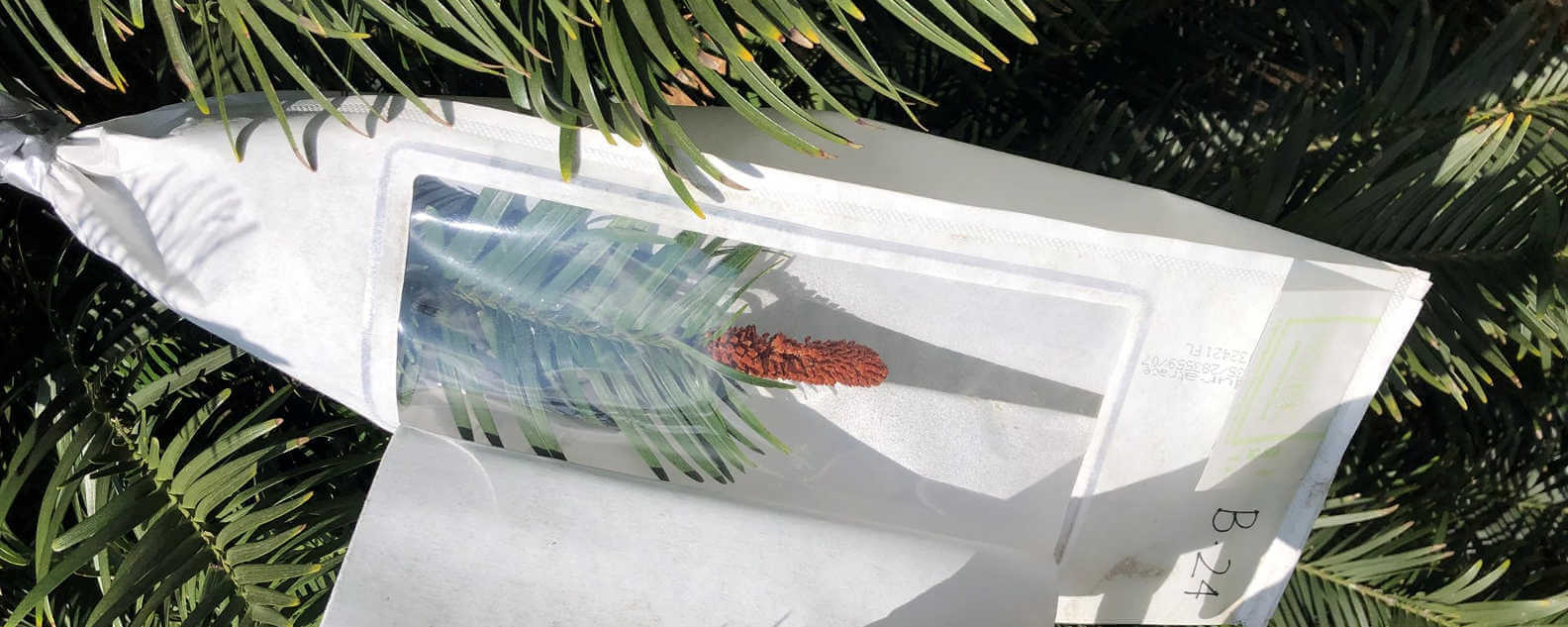
Waiting for a Wollemi Pine to make a baby is cumbersome process.
“It’s like birthing an elephant – it can take up to two years sometimes,” Dr Cathy Offord, Senior Principal Research Scientist at the Australian PlantBank, says.
Dr Offord has set up an experiment on the trees in the Blue Mountains Botanic Garden Mount Tomah that’s drawing the attention of visitors who stop to see the rare pine discovered deep in a canyon nearby in 1994.
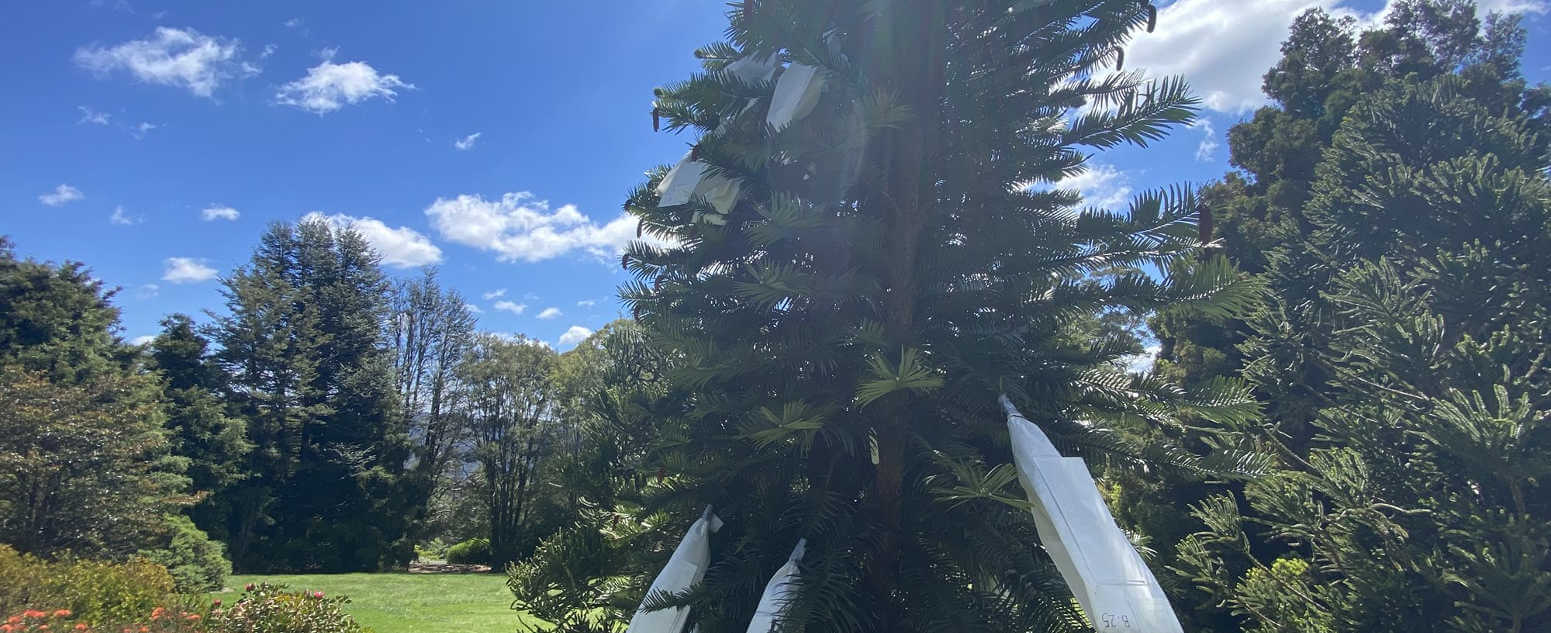
One of the Wollemi Trees set up with the bag experiment.
“They have male and female cones on them and we’re trying to figure out if they pollinate themselves or whether they need or prefer to have pollen from another individual or whether they don’t even need pollination.” Dr Offord says.
Dr Offord says female reproductive cones take more than a year to mature when their golf-ball sized seeds quadruple to tennis ball size.
“It’s a primitive sexual reproduction system and a pretty crude way of making seeds,” she says.
The bags will be removed once the pollen has stopped shedding this month. The cones will be bagged again when the seeds start being shed.
Seeds are collected for future propagation and research.
Delve deeper into the Wollemi Pine
You can learn more about Wollemi Pine research projects or listen the Garden's Branch Out podcast episode featuring Dr Offord below.
You can also see a Wollemi Pine in the heart of the Royal Botanic Garden Sydney, having been planted by Dr Offord in 1996.
Related stories

A molecular tool could change the future of broad-leaved paperbark, allowing scientists to identify myrtle rust–resistant trees and restore threatened landscapes more effectively.

One year ago, a pungent princess captivated the world when she bloomed at the Royal Botanic Garden Sydney. Our new documentary goes behind the scenes to reveal her rapid rise to fame, her extraordinary life cycle, and the conservation work saving this once-a-decade bloomer.

For the team at the Research Centre for Ecosystem Resilience (ReCER), a request from the Blue Mountains Botanic Garden to design a hedge of the towering Nothofagus moorei, or Antarctic beech, sparked a unique collaboration between science and horticulture.