2023 Margaret Flockton Award
View the winners of the 2023 Margaret Flockton Award, an international award for excellence in scientific botanical illustration.
Congratulations to the 2023 Margaret Flockton Award winners
The 20th Margaret Flockton Award celebrates another diverse array of scientific botanical illustrations.
This year, Botanic Gardens of Sydney’s own botanical illustrators and Award curators Catherine Wardrop and Lesley Elkan, plus Information Botanist Peter Jobson, judged a total of 54 entries, created by 37 artists from 18 countries.
The exhibition of finalist work will be on display in the National Herbarium of New South Wales foyer from 21 August – 6 October.
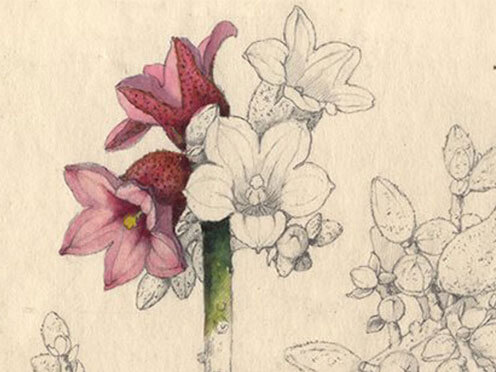
Image, top: Prunus persica var. persica (detail) by Laura Ribulgo.
First prize
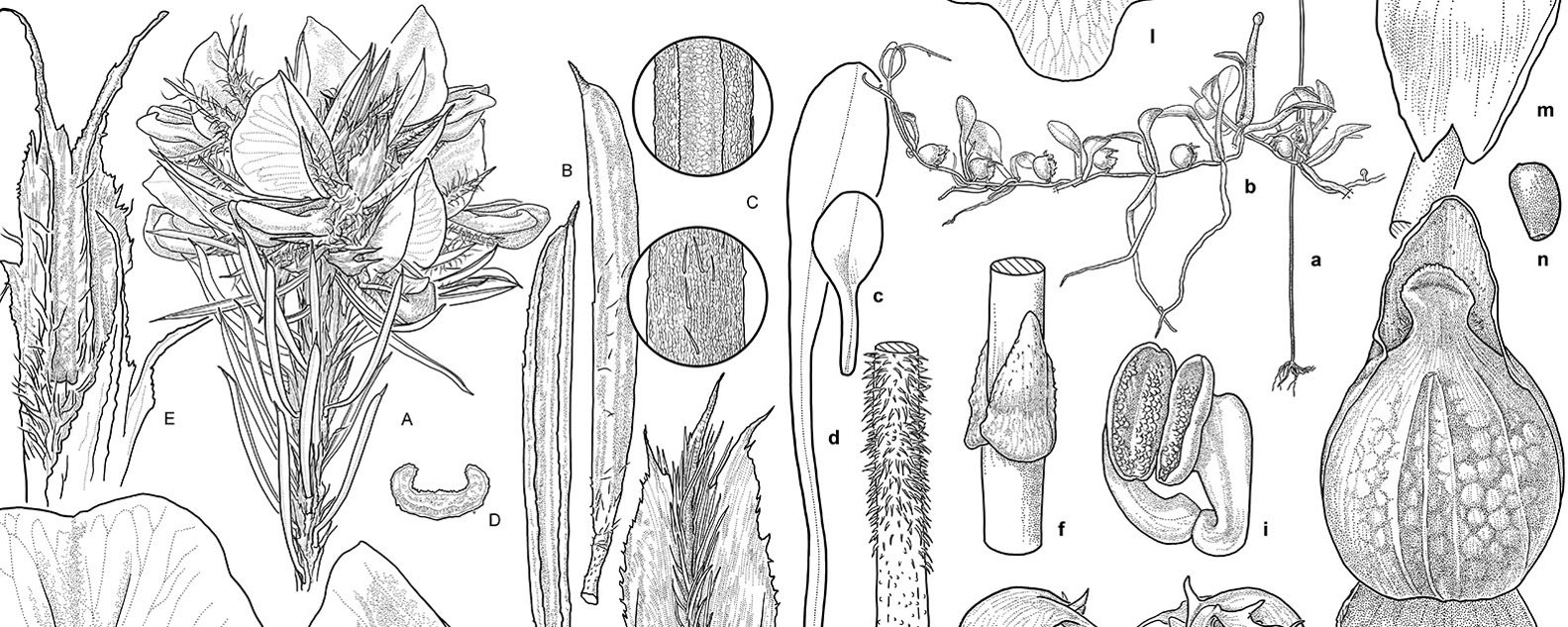
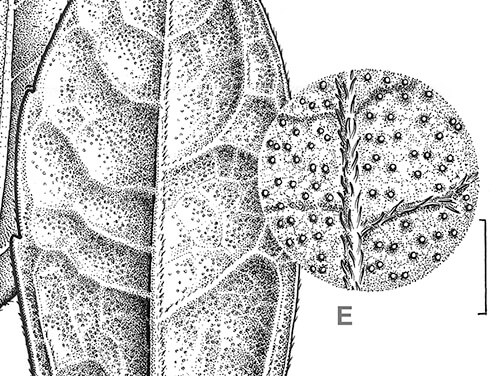
Wedelia sp. nov. by Gustavo Surlo
This comprehensive plate of a new species of Wedelia displays great strength and clarity in its style, yet the rendering communicates delicate and detailed surface textures. In this winning work, Gustavo has skilfully composed a large number of elements, yet the illustration is easy to read and carefully balanced.
The plate reveals the full story of the species, from the plant sketch in situ, to a complex habit displaying the distinctive root stock, right down to the minute hairs and glands on the leaf surface. The subtle use of lines and arrows assists in describing the source of the magnified details and the numerous scale bars clearly relate to the elements they describe without dominating the plate.
© Gustavo Surlo
Second prize
Phoenix canariensis by Juan Luis Castillo
Another highly accomplished digital illustration captures the complex structure of the Phoenix palm with delicate simplicity. The large frond, embellished with linear tone, is full of movement and life, a challenge with such a large, flat subject.
With the use of delicate line and continuous tone, Juan has also created a clear rendering of a complex habit, without the lines blocking in or dropping out on reduction. Variation in line weight creates interest and effectively assists in describing form.
The judges could not fault the composition, with its balanced arrangement, using the element’s strong shapes to easily direct the eye around the plate.

© Juan Luis Castillo
Highly commended
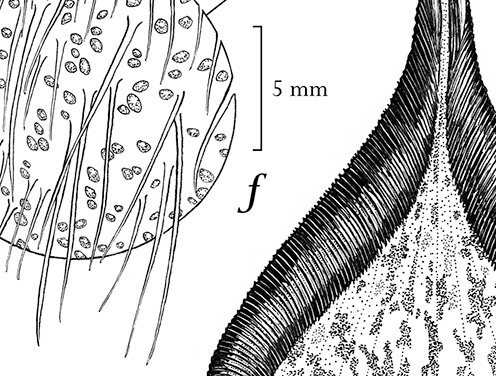
Nepenthes macfarlanei by François Sockhom Mey
This dynamic ink drawing effectively captures the pigmentation on the wonderfully 3-dimensional pitchers, whilst also balancing well with the delicate leaf venation and fine hairs and glands.
This is another great example of using composition to create an interesting illustration that doesn’t confuse, but informs the viewer, by giving context to the complex and often abstract magnified structures. The judges were entertained by the subjects breaking out of their circular constraints, giving the drawing a bit more character.
© François Sockhom Mey
Highly commended
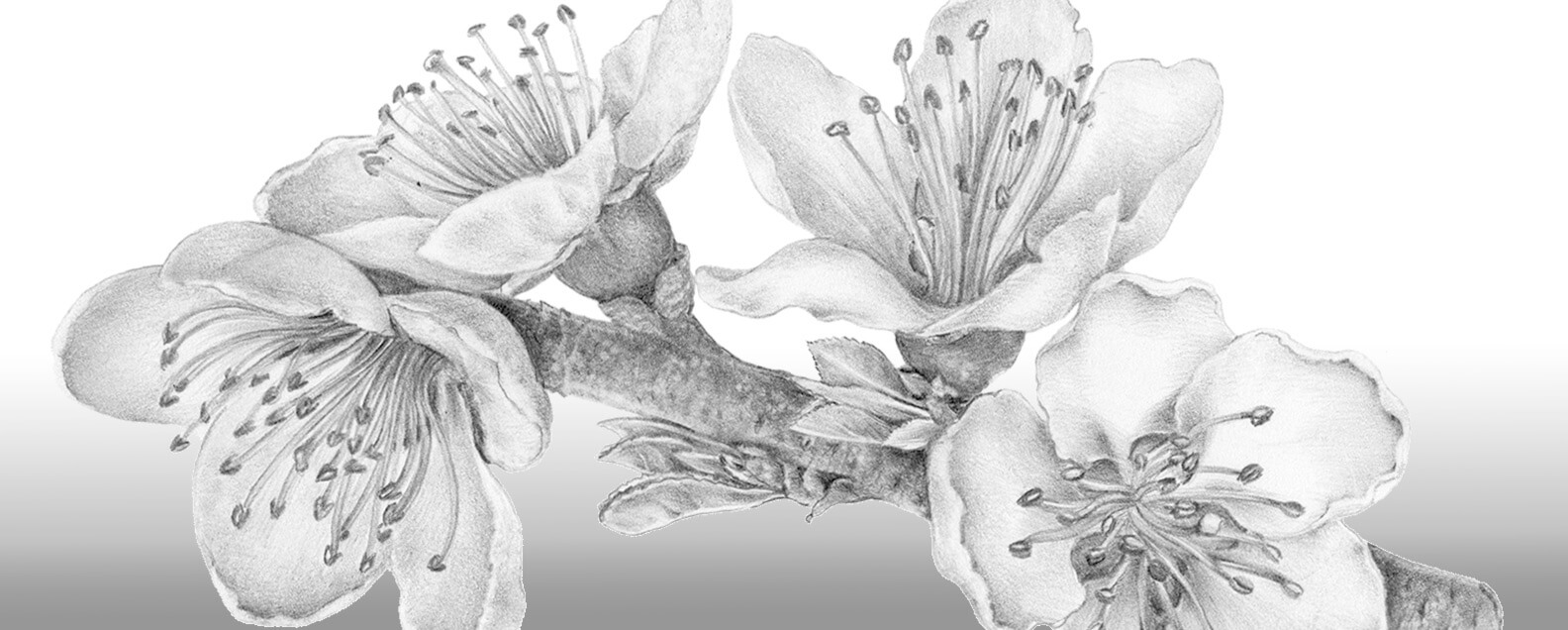
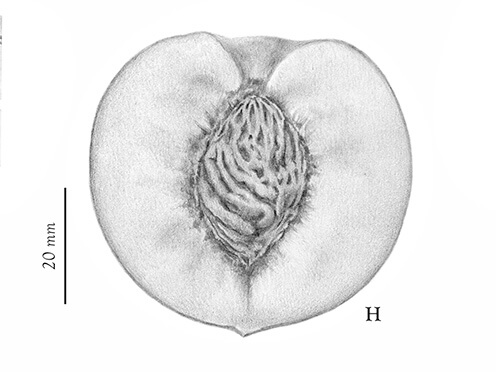
Prunus persica var. persica by Laura Ribulgo
This beautifully executed graphite rendering captured the judges. Although created in a medium notorious for dropping-out in reproduction, Laura’s technique has enough strength and clarity to print well and clearly communicate even the finest plant structures. An excellent example of soft and subtle tonal work combines with clear outlines and just enough contrast in detailed areas to avoid confusion. The simple layout works well, allowing each element to stand on its own, without complicated layering.
© Laura Ribulgo
View the Award online
View the winning entries for the 2023 Margaret Flockton Award on Flickr.
About the Award
The Margaret Flockton Award is an annual, international award for excellence in scientific botanical illustration. It also commemorates the contributions that Margaret Flockton (1861–1953), the Royal Botanic Garden Sydney's first scientific illustrator, made to Australian scientific botanical illustration.
Every year, illustrators from around the world submit scientifically accurate drawings that accompany the published taxonomic description of a plant, clearly highlighting all of the distinctive features of the species. Original taxonomic illustrations are highly detailed black and white drawings primarily undertaken in pen and ink, pencil or digitally rendered.
The Maple-Brown Family and the Foundation & Friends of the Botanic Gardens sponsor the Margaret Flockton Award.
Judging criteria
Entries are assessed in accordance with the following criteria:
- accurate interpretation and portrayal of plant characters and diagnostic features
- technical merit
- reproducibility
- composition
- artistic merit.
Previous Margaret Flockton Awards
2022
2023 entry requirements
- All previous winners of the Margaret Flockton Award are eligible to enter, excluding 2020, 2021 and 2022 first prize-winning artists.
- There are no entry fees for the Margaret Flockton Award and Exhibition.
- Entries are to be submitted between Monday 8 May and 5 pm AEST Sunday 21 May.
- Works must have been produced after May 2021.
All illustrations and paperwork must be submitted digitally. Original artwork and paperwork sent via the postal system will no longer be accepted.
Each artist may submit up to two illustrations. Only high-resolution digital scans of black and white (for example pen and ink, graphite or scraperboard) illustrations and/or monochromatic, digitally rendered illustrations, either published or unpublished, will be considered. All illustrations must be intended for 2D-printed output. Animated or 3D rendered works or images dependent on digital viewing, as well as photos and photo montage works, are not eligible for submission.
Entries are to be digitally submitted at 100% of the original artwork size with an image area no larger than A3 (295 mm x 420 mm) and no smaller than (180 x 250 mm), excluding legend.
Illustrations outside of these parameters will not be accepted. The digital canvas size may only be longer than A3 to allow for the legend. The illustration should include a small legend (with the plant name and all lettered components), neatly written or typed at the bottom of the artwork, outside of the image area.
Only full plate illustrations will be accepted (inclusive of habit study and diagnostic features of the species). The inclusion of scale bars, whilst not compulsory, is highly recommended.
Note: eligible entries may be printed at 67% of the original size to assess reproducibility at judging.
Due to the limitations of space, a selection of works will be made for the exhibition.
Illustrations selected for exhibition will be printed on high-quality paper and framed in standard exhibition frames or printed at high resolution on good quality outdoor display material such as canvas or vinyl. Some works may be enlarged for display, subject to artists' approval.
The Margaret Flockton Award Exhibition will display high-quality prints of submitted digital files only. Original artworks are neither exhibited nor sold at the Margaret Flockton Award Exhibition. If artists wish to provide an email or professional website address for direct enquiries regarding sales/other from the customer, please enter details on the biography template and consent to their use via the entry form.
On the entry form consent is sought for the following:
- For the Royal Botanic Gardens and Domain Trust to store and print one high-resolution copy of each entry for judging and exhibition.
- To allow high-resolution illustrations to be reproduced and biographical information to be used by the Royal Botanic Gardens and Domain Trust or the Foundation and Friends of the Botanic Gardens for the sole purpose of promoting the Margaret Flockton Award and Exhibition.
- To allow low-resolution illustrations to be created and watermarked with ‘MFA2023’ and biographical information to be viewed in an online ‘Flickr’ gallery format created by the Royal Botanic Gardens and Domain Trust and the Foundation and Friends of the Botanic Gardens.
- To indicate that your original or digital print is available for sale.
- For your contact details to be publicly displayed on your biography and exhibition label.
The Royal Botanic Gardens and Domain Trust and the Foundation and Friends of the Botanic Gardens are the sole owners of the information collected from the entry forms and any other information submitted and will not sell or rent this information to others. Information will be shared for the sole purpose of advertising or promoting the Margaret Flockton Award and Exhibition. All care of artworks and the rights of artists will be respected and no illustrations will be commercially reproduced from this process.
All illustrations and paperwork must be submitted digitally via Dropbox
Submit completed forms (1-4) with up to two image files to Dropbox
Label each image file as follows: ARTIST SURNAME Plant name (eg. WARDROP Casuarina glauca.tiff)
Once you have created your account be sure to invite [email protected] to View AND Edit files in the shared folder where you have uploaded your image files.
Ensure you have emailed [email protected] to notify the curators of your entry in Dropbox.
The Margaret Flockton Award Committee will contact you to confirm your image files have been received.
Digital file specifications
- One high resolution digital file is to be submitted for each illustration. The file size should not exceed 200MB
- High resolution for judging and exhibiting:
- No photos of artworks will be accepted - scanned original works or digitally created images only.
- Ink line and stipple - Bitmap tiff @ 1200dpi
- Pencil or Continuous tone - Greyscale tiff or psd (NOT jpg) (Colour files will NOT be accepted, please convert to greyscale) @ 600dpi (minimum).
Entries are to be digitally submitted at 100% of original artwork size with an image area no larger than A3 (295 mm x 420 mm) and no smaller than (180 x 250 mm), EXCLUDING legend. Illustrations outside of these parameters will not be accepted. The digital canvas size may only be longer than A3 to allow for the legend.
While large file transfer sites such as Dropbox are reliable and secure The Royal Botanic Gardens and Domain Trust and the Foundation and Friends of the Botanic Gardens will not be liable for any breaches of security associated with the transfer of digital images and information associated with the entries in the Margaret Flockton Award nor will they be responsible for any loss or damage of files in transit.
- Create a folder to upload your completed forms (1–4) in your Dropbox account.
- Label your folder as follows: SURNAME MFA 2023 (eg. WARDROP MFA 2023)
1. Complete my entry form
Each illustration must be accompanied by an entry form. When submitting this form you are agreeing to all of the conditions of entry. Please read all conditions carefully before submitting.
Incomplete entry forms may render entries ineligible. Please tick the checklist on the entry form to ensure all information has been supplied.
Label your entry form as follows: SURNAME entry form (eg. WARDROP entry form.docx)
2. Complete my label template
Each illustration is to be accompanied by a fully completed label template with the scientific name of the plant, medium, artist's name and the legend of the drawing. These will be printed and displayed with each work.
Label your label template as follows: SURNAME Plant name label template (eg. WARDROP Casuarina glauca label template.docx)
3. Complete my biography
The provision of biographical information, contact details and photo is completely optional.
Label your biography as follows: SURNAME biography (eg. WARDROP biography.docx)
A folder containing biographies of the contributing artists is compiled each year for visitors to refer to. For your biography a template has been provided on the link above with fields for your name, date and place of birth; education and career highlights; publication and exhibition history; website and email contact details. A scanned portrait or suitable passport photo of the artist is also to be inserted in the delineated spot in the template. Otherwise, a digital photo can be emailed separately.
Please limit the length of your biography to under two A4 pages.
NOTE: Original artworks are neither exhibited nor sold at the Margaret Flockton Award Exhibition. If artists wish to provide an email or professional website address for direct enquiries regarding sales/other from the customer, they must enter those details on the biography template and consent to their use via the entry form.
4. Supply a taxonomic description
A taxonomic description (either published or unpublished) must be provided with each illustration. The taxonomic description should be typed and submitted electronically. This will not be framed with the artwork but will be available in a separate folder during the judging and exhibition. Examples of such descriptions can be found in local Flora publications or on PlantNET, an online resource for the plants of New South Wales.
Label your taxonomic description as follows: SURNAME Genus taxonomic description (eg. WARDROP Casuarina taxonomic description.docx)
Entries will be assessed in accordance with the following criteria:
- accurate interpretation and portrayal of plant characters and diagnostic features;
- technical merit
- reproducibility
- composition
- artistic merit
See A guide to scientific illustration below for more information on judging criteria.
Works should be submitted as ready for publication and must be capable of being reduced to 67% of the original size without loss of detail. A major criterion of scientific illustration is that images should be clearly and simply reproduced through the printing process.
After judging or, in the case of exhibited works, at the conclusion of the exhibition period, all high-resolution digital files and printed illustrations will be destroyed with the exception of the winning, second prize and highly commended works. These are to be stored for historical and publicity purposes only. With the artist’s permission (see entry form) low-resolution jpegs will be available for online viewing from August 2023 via our Flickr gallery.
First and second prize-winners will be paid by electronic transfer in Australian dollars soon after the awards are announced. Overseas artists will be paid by International Money Transfer in Australian dollars and will need to provide their bank account information upon request. Overseas artists should note their banking institutions may charge fees for international transactions
The science of botany requires plant taxonomists to describe plant species in both words and drawings, with botanists preparing a detailed description of the plant and the artist producing an accompanying illustration.
Taxonomic illustrations are normally published in scientific journals as highly detailed black and white drawings (primarily pen and ink, more rarely pencil) or digitally rendered illustrations (excluding photos and photo-montage), representing aspects of plant morphology essential for identification.
The Margaret Flockton Award is unique in art awards in that it recognises and promotes scientific botanical illustration as opposed to botanical art.
With the above in mind, the evaluation of entries is based on the following criteria:
- Accurate interpretation and portrayal of plant characters and diagnostic features noted in the botanical description
- Technical merit
- Reproducibility
- Composition
- Artistic merit
When considering these broad criteria, the following are also taken into account:
Precision and accuracy
Correct botanical detail, all plant characters and diagnostic features must be accurately displayed.
Reproducibility
The image must be capable of being successfully scanned and reproduced (often reduced) without loss of detail. Very dense (black) or light detail may not reproduce well. A major criterion of scientific illustration is that images should be clearly and simply reproduced through the printing process. Illustrations must be capable of being reduced to 67% of the original size without loss of detail.
Good composition
The plate should be laid out to give a balanced presentation allowing the overall effect to be aesthetically pleasing. This balance is best demonstrated by the careful placement of the primary subject. In other cases, balance may be the result of careful placement of the dissected details of the plant.
Use of scale bars, whilst not mandatory, is preferred
Great care should be taken in giving the correct scale of each feature. If possible, avoid using multipliers eg. 'x3' or 'x0.5' to indicate the size of features, as this becomes meaningless if the drawing is used in a publication and printed at a different size; the use of a scale bar is accurate regardless of changes to the size of the image.
Signature
The signature should be neat, small and consistent, with the year noted.
Lesley Elkan and Catherine Wardrop
The Margaret Flockton Award
c/- Illustration, National Herbarium of NSW
Australian Institute of Botanical Science
The Australian Botanic Garden
Locked Bag 6002, Mount Annan NSW 2567
Email: [email protected]
See the exhibit
You can see the exhibit in person at the National Herbarium of New South Wales from 21 August – 6 October, or view the exhibit artworks online.
Watch the commentary for the 2022 Margaret Flockton Award.
Related reading